Crawlspace vapor & wood decay defense in Augusta addresses the specific environmental factors that lead to subfloor failure across Richmond County. In historic riverfront neighborhoods like Old Town and Harrisburg,…
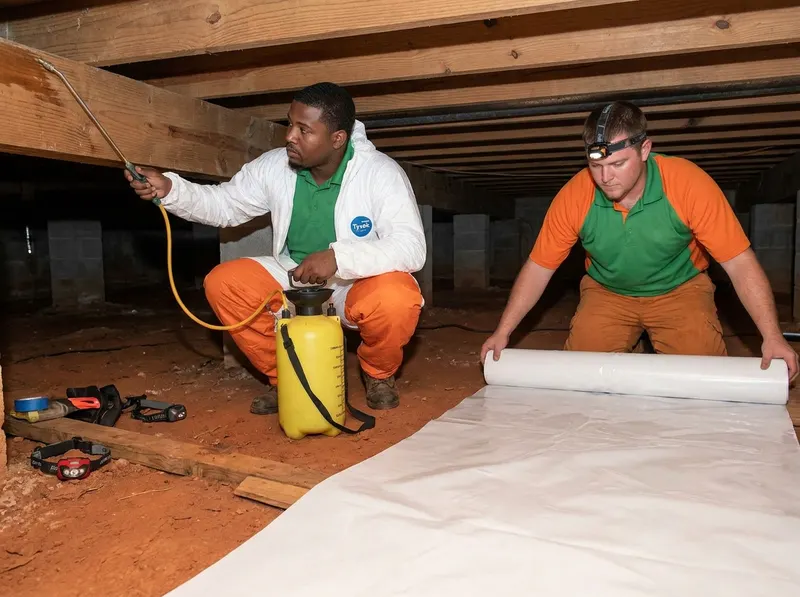
Crawlspace vapor & wood decay defense in Augusta addresses the specific environmental factors that lead to subfloor failure across Richmond County. In historic riverfront neighborhoods like Old Town and Harrisburg, brick pier foundations sit over high-water-table silts near the Augusta Canal and Savannah Riverwalk. Ground humidity routinely pushes unsealed crawlspace wood moisture past the critical 20% fiber-saturation threshold. At this moisture level, cellulose-destroying fungi such as Coniophora puteana break down structural lignin, softening joists and drawing subterranean termites directly upward from the soil.
Subfloor treatments fit homes displaying fungal hyphae, cupping hardwood floors, or active wood decay. The trade-off involves addressing the ground environment rather than relying purely on liquid soil barriers: surface termiticides defend the foundation perimeter, but moist, untreated wood continues to harbor fungal pathogens and wood-boring beetles without moisture mitigation. A 12-mil to 20-mil reinforced ground vapor barrier blocks soil dampness, while localized borate salts penetrate up to 0.5 inches into framing lumber, rendering structural pine unpalatable to wood-destroying organisms. Technicians conduct physical subfloor measurements before applying mineral-based treatments that remain bound inside the wood grain.
Properties in Summerville, Forest Hills, and National Hills frequently feature crawlspaces with less than 24 inches of clearance beneath aged heart-pine framing. Heavy summer humidity from nearby Phinizy Swamp Nature Park saturates crawlspace air, allowing fungal spores to germinate without direct plumbing leaks. Installing a durable ground barrier and treating joists halts active decay fungi without locking homeowners into recurring monthly spray contracts. Direct structural remediation stabilizes relative humidity between 50% and 60%, removing the environmental conditions required for secondary pest infestations.
Every job gets a firm, written price after a free on-site visit.
Tell us about your crawlspace vapor & wood decay defense job in Augusta and we'll send a clear, written quote, usually the same day.
 Trivano Pest Assistance