Structural parasite management differs fundamentally from standard broad-spectrum pest sprays. Over-the-counter pyrethroid foggers frequently trigger flea pupal emergence without penetrating deep carpet pile or…
Structural parasite management differs fundamentally from standard broad-spectrum pest sprays. Over-the-counter pyrethroid foggers frequently trigger flea pupal emergence without penetrating deep carpet pile or baseboard subflooring, resulting in recurring bites within 14 days. Flea and tick structural remediation targets the entire lifecycle using adulticides combined with juvenile hormone mimics (pyriproxyfen or hydroprene). This halts chitin synthesis so non-adult stages cannot mature into biting adults. The protocol stabilizes indoor environments in humid Richmond County sectors like Harrisburg and Old Town, where elevated ground moisture along the Savannah River basin accelerates flea reproduction cycles.
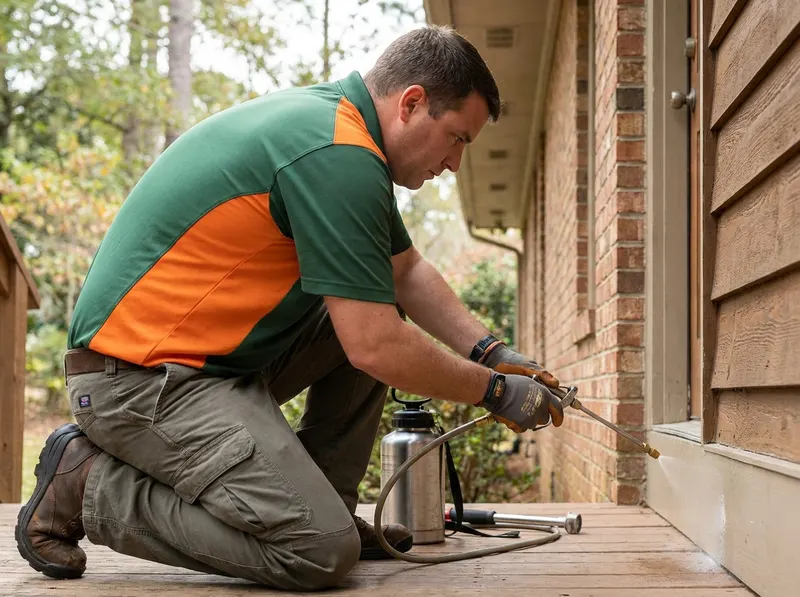
Interior treatments focus on direct contact zones: carpet fibers, upholstered furniture seams, hardwood floor crevices, and pet resting stations. Residents vacate the treated structure for 3 to 4 hours until liquid deposits dry into a stable, non-transferable micro-barrier that remains inert to children and mammalian pets. Exterior barrier defense addresses shaded foundation perimeter zones, damp leaf litter under deck pilings, and shaded yard boundaries. In wooded properties across Summerville, Forest Hills, and Montclair, white-tailed deer and feral rodents deposit tick nymphs directly onto private lawns, necessitating a dual interior-exterior barrier approach.
Decision guidance dictates treatment intensity based on host presence and moisture conditions. If an active home exhibits indoor jumping fleas on socks or upholstery, a full dual-phase remediation protocol is required. If ticks are observed strictly along foundation crawlspaces or brick weep screeds near Augusta National Golf Club or Phinizy Swamp drainage tributaries, an exterior perimeter microencapsulate application with crawlspace dusting resolves the issue without unnecessary interior surface spraying. Properties with heavy flea burdens require a mechanical prep phase: rigorous vacuuming of all carpeted rooms immediately prior to technician arrival lifts pile fibers and stimulates dormant pupae to emerge into the treatment zone.
1. Initial room-by-room diagnostic inspection maps parasite hot spots and pet resting corridors.
2. Application of targeted adulticide combined with an insect growth regulator across floors, rugs, and subfloor junctures.
3. Exterior 10-foot granular or liquid barrier application to foundation walls and adjacent perimeter turf.
4. Mechanical follow-up instructions specify daily vacuuming for 10 consecutive days to remove sterilized eggs and pupal casings.
Every job gets a firm, written price after a free on-site visit.
Tell us about your flea & tick structural remediation job in Augusta and we'll send a clear, written quote, usually the same day.
 Trivano Pest Assistance